

1392 字
7 分钟
优先队列
一、 什么是优先队列
如果有这样一个数据流 1,2,3,4,5,6,7,8 我们需要按照一定的优先级找到满足条件(最大或者最小)的元素,并且每次取出最高优先级的元素后,内部元素依旧能够按照既定优先级保证最高优先级的元素在顶端。
二、 最大堆 & 最小堆
堆分为最大堆和最小堆,其实就是完全二叉树- 最大堆
- 要求节点的元素都要大于等于其孩子
- 最小堆
- 要求节点元素都小于等于其左右孩子
- 最大堆
- 两者对左右孩子的大小关系不做任何要求
为什么用 二叉树 来实现呢?
如果使用数组复杂度会更高
三、 插入元素
如下数据流,我们按照顺序插入数据,并且每次返回最大的元素,我们就可以使用优先队列(最大堆)。
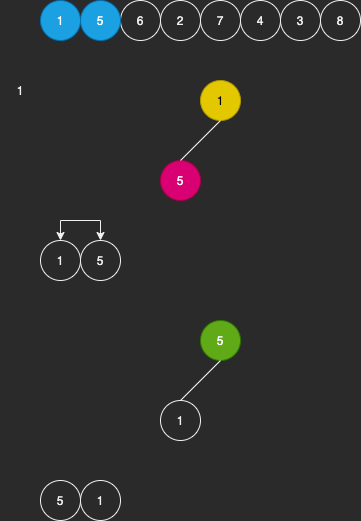
步骤1
- 插入 1 和 5 ,如图二叉树结构
- 叶子节点 5 > 1 ,不符合优先级规则,需要交换位置
- 等价数组为
- [5, 1]
步骤2
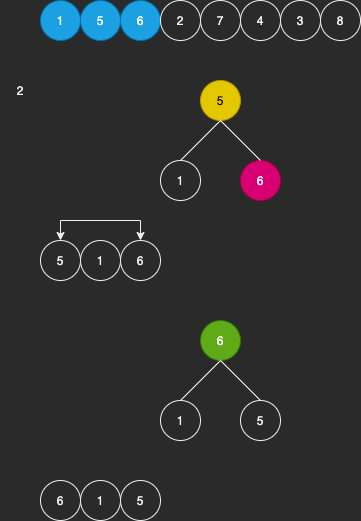
- 插入 6
- 每次插入都插入到当前最深层从左往右的位置,或者创建下一层
- 6 大于父节点 5,需要调整位置
- 交换 5 6
- 等价数组为
- [6, 1, 5]
步骤3
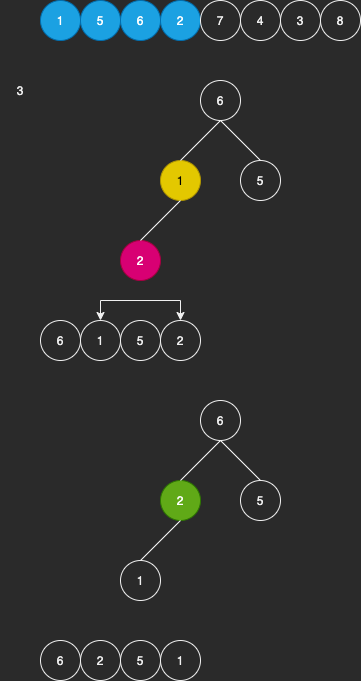
- 插入 2
- 这一层满了,下一层最左边
- 2 大于父节点 1,需要调整
- 交换 2 1
- 等价数组为
- [6, 2, 5, 1]
步骤4
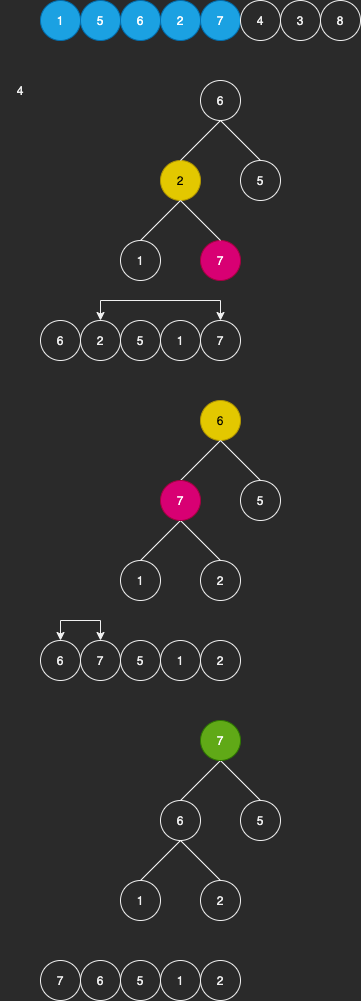
- 插入 7
- 7 大于父节点 2,需要调整
- 交换 7 2
- 7 的父节点变为 6,还需要调整
- 交换 7 6
- 等价数组为
- [7, 6, 5, 1, 2]
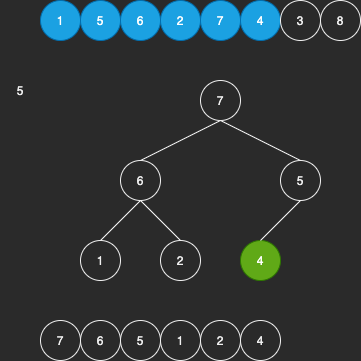
步骤5
- 插入 4,父节点为 5,无需调整
- 等价数组为
- [7, 6, 5, 1, 2, 4]
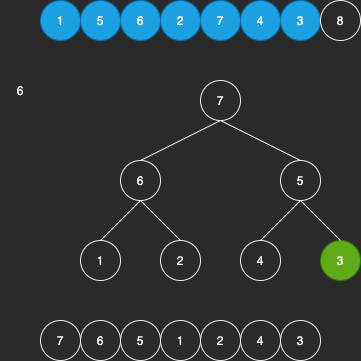
步骤6
- 插入 3,父节点为 5,无需调整
- 等价数组为
- [7, 6, 5, 1, 2, 4, 3]
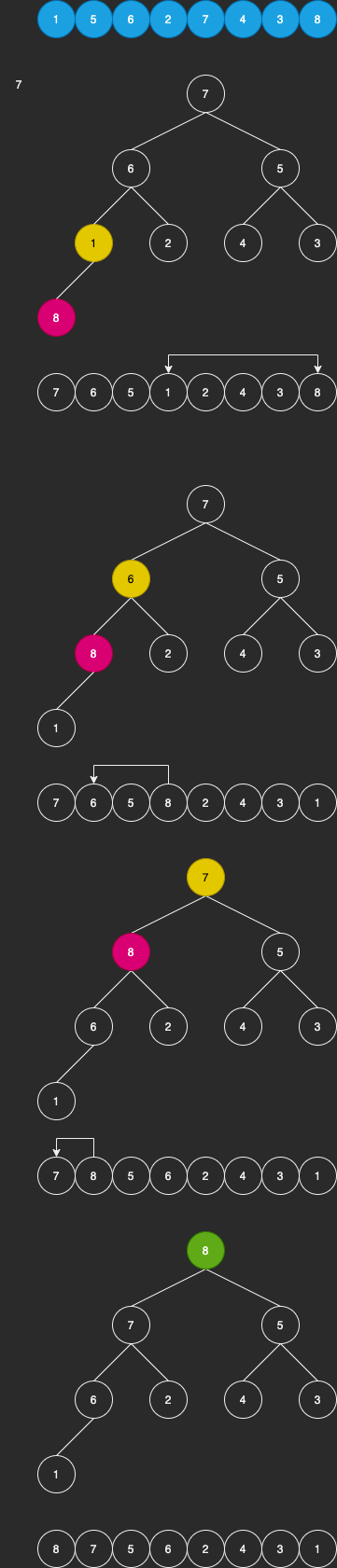
步骤7
- 插入 8
- 下一层
- 大于父节点 1,交换
- 大于父节点 6,交换
- 大于父节点 7,交换
- 等价数组为
- [8, 7, 5, 6, 2, 4, 3, 1]
插入代码实现
基础数据结构
public struct SwiftPriorityQueue<Element> { private let _hasHigherPriority: (Element, Element) -> Bool private let _isEqual: (Element, Element) -> Bool
private var _elements = [Element]()
public init(hasHigherPriority: @escaping (Element, Element) -> Bool, isEqual: @escaping (Element, Element) -> Bool) { _hasHigherPriority = hasHigherPriority _isEqual = isEqual }
public func peek() -> Element? { return _elements.first }
public func array() -> [Element] { return _elements }
public var isEmpty: Bool { return _elements.count == 0 }
public var count: Int { return _elements.count }}插入逻辑
// 插入public mutating func enqueue(_ element: Element) { _elements.append(element) bubbleToHigherPriority(_elements.count - 1)}
// 爬升private mutating func bubbleToHigherPriority(_ initialUnbalancedIndex: Int) { precondition(initialUnbalancedIndex >= 0) precondition(initialUnbalancedIndex < _elements.count)
var unbalancedIndex = initialUnbalancedIndex
while unbalancedIndex > 0 { let parentIndex = (unbalancedIndex - 1) / 2 guard _hasHigherPriority(_elements[unbalancedIndex], _elements[parentIndex]) else { break } _elements.swapAt(unbalancedIndex, parentIndex) unbalancedIndex = parentIndex }}四、 移除元素
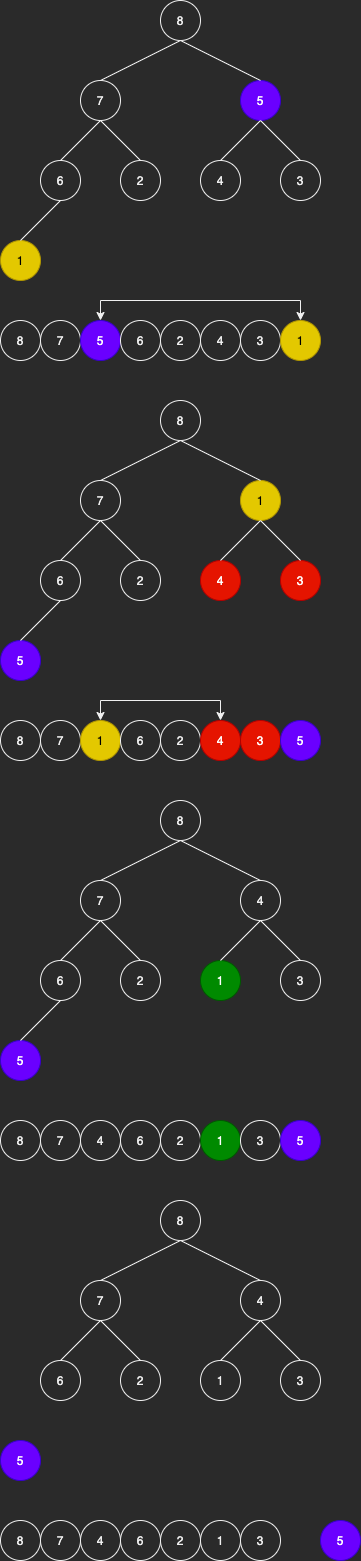
我们还以上面完成的 优先队列 数据结构为例,继续对移除元素的操作进行研究。
- 这里我们计划移除 5 元素(当前下表为A)
- 现将其和尾部元素交换
- 移除尾部元素
- 检查 A 处元素是否需要爬升
- 是
- 将其上浮
- 此处 A 元素为 1,小于父节点 8,无需处理
- 将其上浮
- 是
- 检查 A 处元素是否需要下沉
- 是
- 将其下降
- 此处 A 元素为 1,小于子节点,进行下沉处理
- 将其下降
- 是
移除与下沉逻辑实现
private mutating func removeAt(_ index: Int) { // 是否是最后一个元素 let removingLast = index == _elements.count - 1 if !removingLast { _elements.swapAt(index, _elements.count - 1) }
_ = _elements.popLast()
if !removingLast { // 检查并保持优先队列的元素 bubbleToHigherPriority(index) bubbleToLowerPriority(index) }}
private mutating func bubbleToLowerPriority(_ initialUnbalancedIndex: Int) { precondition(initialUnbalancedIndex >= 0) precondition(initialUnbalancedIndex < _elements.count)
var unbalancedIndex = initialUnbalancedIndex while true { // 根据二叉树的结构,当前节点左叶子节点的下标为 unbalancedIndex * 2 + 1 let leftChildIndex = unbalancedIndex * 2 + 1 // 根据二叉树的结构,当前节点右叶子节点的的下标为 unbalancedIndex * 2 + 2 let rightChildIndex = unbalancedIndex * 2 + 2
var highestPriorityIndex = unbalancedIndex
// 左叶子更高 if leftChildIndex < _elements.count && _hasHigherPriority(_elements[leftChildIndex], _elements[highestPriorityIndex]) { highestPriorityIndex = leftChildIndex }
// 右叶子更高 if rightChildIndex < _elements.count && _hasHigherPriority(_elements[rightChildIndex], _elements[highestPriorityIndex]) { highestPriorityIndex = rightChildIndex }
guard highestPriorityIndex != unbalancedIndex else { break // 不用调整优先级 }
// 交换元素 _elements.swapAt(highestPriorityIndex, unbalancedIndex)
// 保存更高优先级的下标,继续进行对比 unbalancedIndex = highestPriorityIndex }}Swift 完整实现
下面的优先队列实现是参考 RxSwift 中的
public struct SwiftPriorityQueue<Element> { private let _hasHigherPriority: (Element, Element) -> Bool private let _isEqual: (Element, Element) -> Bool
private var _elements = [Element]()
public init(hasHigherPriority: @escaping (Element, Element) -> Bool, isEqual: @escaping (Element, Element) -> Bool) { _hasHigherPriority = hasHigherPriority _isEqual = isEqual }
public mutating func enqueue(_ element: Element) { _elements.append(element) bubbleToHigherPriority(_elements.count - 1) }
public func peek() -> Element? { return _elements.first }
public func array() -> [Element] { return _elements }
public var isEmpty: Bool { return _elements.count == 0 }
public var count: Int { return _elements.count }
public mutating func dequeue() -> Element? { guard let front = peek() else { return nil }
removeAt(0)
return front }
public mutating func remove(_ element: Element) { for i in 0 ..< _elements.count { if _isEqual(_elements[i], element) { removeAt(i) return } } }
private mutating func removeAt(_ index: Int) { let removingLast = index == _elements.count - 1 if !removingLast { _elements.swapAt(index, _elements.count - 1) }
_ = _elements.popLast()
if !removingLast { bubbleToHigherPriority(index) bubbleToLowerPriority(index) } }
private mutating func bubbleToHigherPriority(_ initialUnbalancedIndex: Int) { precondition(initialUnbalancedIndex >= 0) precondition(initialUnbalancedIndex < _elements.count)
var unbalancedIndex = initialUnbalancedIndex
while unbalancedIndex > 0 { let parentIndex = (unbalancedIndex - 1) / 2 guard _hasHigherPriority(_elements[unbalancedIndex], _elements[parentIndex]) else { break } _elements.swapAt(unbalancedIndex, parentIndex) unbalancedIndex = parentIndex } }
private mutating func bubbleToLowerPriority(_ initialUnbalancedIndex: Int) { precondition(initialUnbalancedIndex >= 0) precondition(initialUnbalancedIndex < _elements.count)
var unbalancedIndex = initialUnbalancedIndex while true { let leftChildIndex = unbalancedIndex * 2 + 1 let rightChildIndex = unbalancedIndex * 2 + 2
var highestPriorityIndex = unbalancedIndex
if leftChildIndex < _elements.count && _hasHigherPriority(_elements[leftChildIndex], _elements[highestPriorityIndex]) { highestPriorityIndex = leftChildIndex }
if rightChildIndex < _elements.count && _hasHigherPriority(_elements[rightChildIndex], _elements[highestPriorityIndex]) { highestPriorityIndex = rightChildIndex }
guard highestPriorityIndex != unbalancedIndex else { break } _elements.swapAt(highestPriorityIndex, unbalancedIndex)
unbalancedIndex = highestPriorityIndex } }}
extension SwiftPriorityQueue : CustomDebugStringConvertible { public var debugDescription: String { return _elements.debugDescription }}