

Key 的作用
我们创建这样一个示例:
import 'dart:math';
import 'package:flutter/material.dart';
void main() { runApp(const MyApp());}
class MyApp extends StatelessWidget { const MyApp({Key? key}) : super(key: key);
@override Widget build(BuildContext context) { return MaterialApp( title: 'Flutter Demo', theme: ThemeData( primarySwatch: Colors.blue, ), home: HomePage(), ); }}
class HomePage extends StatefulWidget { const HomePage({Key? key}) : super(key: key); @override _HomePageState createState() => _HomePageState();}
class _HomePageState extends State<HomePage> { //key的作用就非常大了!! List<Widget> items = [ ColorItem('第1个'), ColorItem('第2个'), ColorItem('第3个'), ];
@override Widget build(BuildContext context) { return Scaffold( appBar: AppBar( title: const Text('Key的作用'), ), body: Row( mainAxisAlignment: MainAxisAlignment.center, children: items, ), floatingActionButton: FloatingActionButton( child: const Icon(Icons.add), onPressed: () { setState(() { items.removeAt(0); }); }, ), ); }}
class ColorItem extends StatefulWidget { final String title;
ColorItem(this.title, {Key? key}) : super(key: key);
@override _ColorItemState createState() => _ColorItemState();}
class _ColorItemState extends State<ColorItem> { final color = Color.fromRGBO( Random().nextInt(256), Random().nextInt(256), Random().nextInt(256), 1.0); @override Widget build(BuildContext context) { return Container( width: 100, height: 100, child: Text(widget.title), color: color, ); }}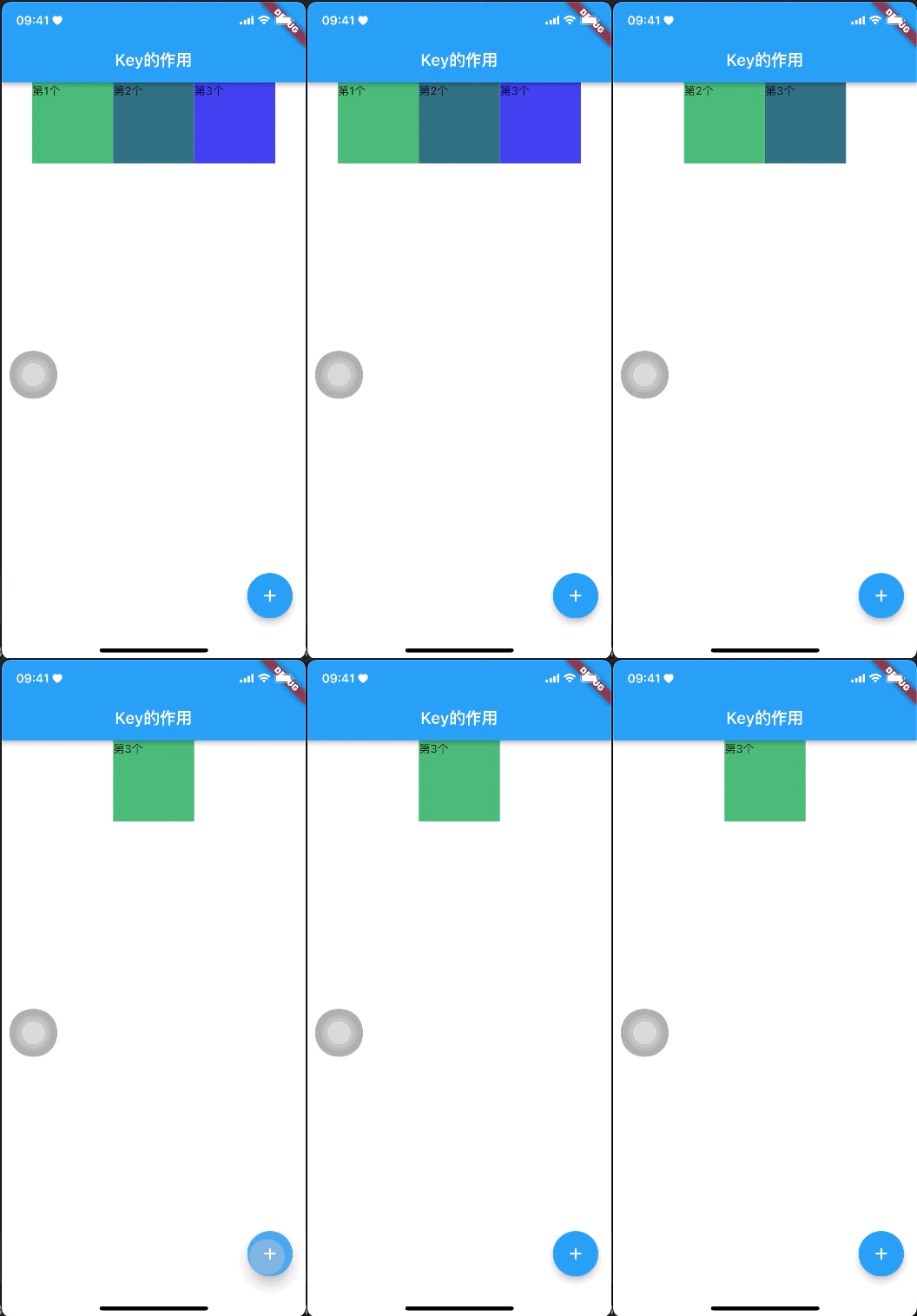
运行发现了上面的现象,作为有 iOS 开发经验的我们,很容易联想到这应该是和复用有关的现象。
复用问题
这里我们需要理解, ColorItem 作为一个 StatefulWidget 它是由两部分组成的: Widget 和 State 。这里就是 Widget 被移除后, State 还在内存中。所以出现了复用异常的问题。
那么将数据放在 Widget 中按照这里分析的理论来说应该就没有这个现象了吧?我们试试:
class ColorItem extends StatefulWidget { final String title; // 移到 Widget 中 final color = Color.fromRGBO( Random().nextInt(256), Random().nextInt(256), Random().nextInt(256), 1.0);
ColorItem(this.title, {Key? key}) : super(key: key);
@override _ColorItemState createState() => _ColorItemState();}
class _ColorItemState extends State<ColorItem> { @override Widget build(BuildContext context) { return Container( width: 100, height: 100, child: Text(widget.title), color: widget.color, ); }}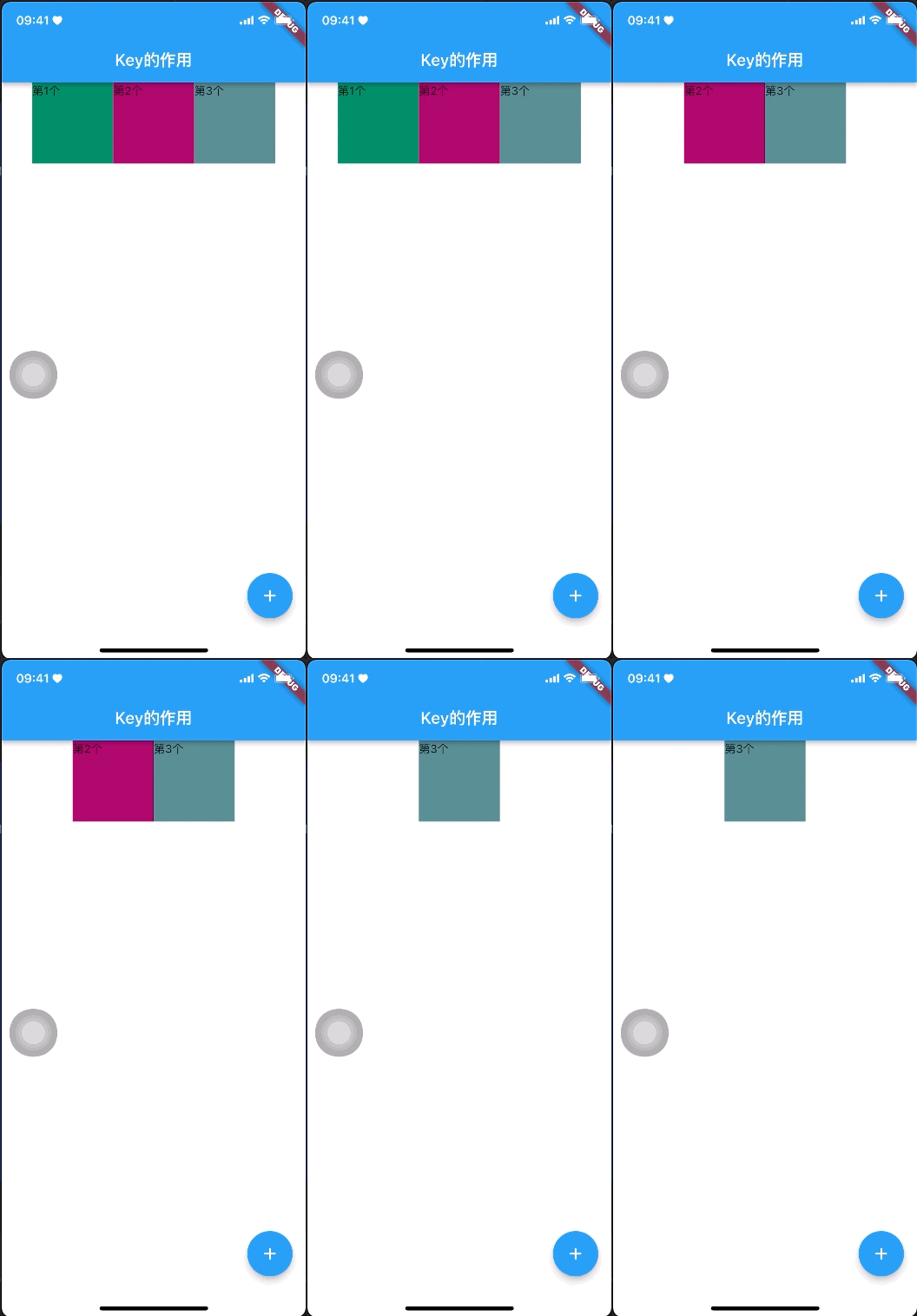
验证成功!那么具体原因是什么呢?
增量渲染与 canUpdate
我们来到 Widget 的实现中, canUpdate 方法决定了一个 Widget 的 Element 是否会被更新,而 Element 的更新,又直接关系到了增量渲染。
同时满足两个条件:
- 新旧
Widget的类型相同 - 新旧
Widget的Key相同- 如果
Key是空的,只通过类型判断,就算他们的子Widget完全不同
- 如果
这里就很好的解释了一开始发生的异常现象。
/// Whether the `newWidget` can be used to update an [Element] that currently/// has the `oldWidget` as its configuration.////// An element that uses a given widget as its configuration can be updated to/// use another widget as its configuration if, and only if, the two widgets/// have [runtimeType] and [key] properties that are [operator==].////// If the widgets have no key (their key is null), then they are considered a/// match if they have the same type, even if their children are completely/// different.static bool canUpdate(Widget oldWidget, Widget newWidget) { return oldWidget.runtimeType == newWidget.runtimeType && oldWidget.key == newWidget.key;}图解
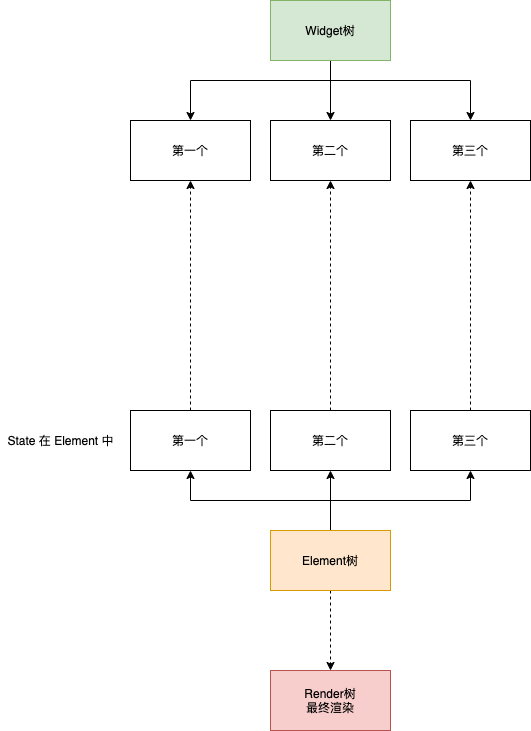
Widget 和 Element 是一一对应的,而 State 是在 Element 中的。
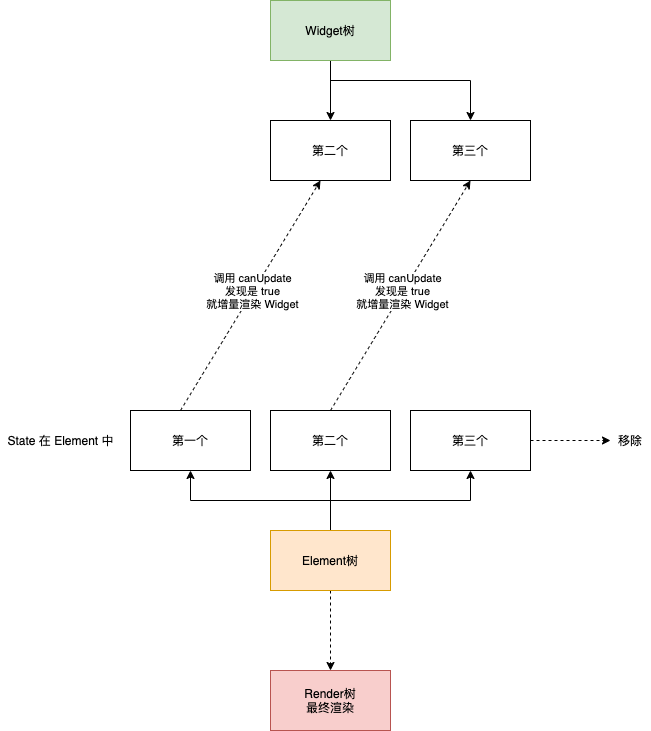
- 移除一个
Widget开始检查 - 第一个
Element检查到第二个Widget- 调用
canUpdate- 类型相同
Key为空- return
ture
- 于是就用
第一个Element更新第二个Widget
- 调用
- 依次类推,就发生了前面的异常现象
既然这里提到了 Key ,那么加上 Key 是否就可以上面这个问题呢?
Key 的使用
这里为每个 ColorItem 加上 Key , 并将 Color 属性放回 State 中:
...
class _HomePageState extends State<HomePage> { //key的作用就非常大了!! List<Widget> items = [ ColorItem( '第1个', key: ValueKey(1), ), ColorItem( '第2个', key: ValueKey(2), ), ColorItem( '第3个', key: ValueKey(3), ), ];
@override Widget build(BuildContext context) { ... }}
class ColorItem extends StatefulWidget { final String title; ...}
class _ColorItemState extends State<ColorItem> { final color = Color.fromRGBO( Random().nextInt(256), Random().nextInt(256), Random().nextInt(256), 1.0); ...}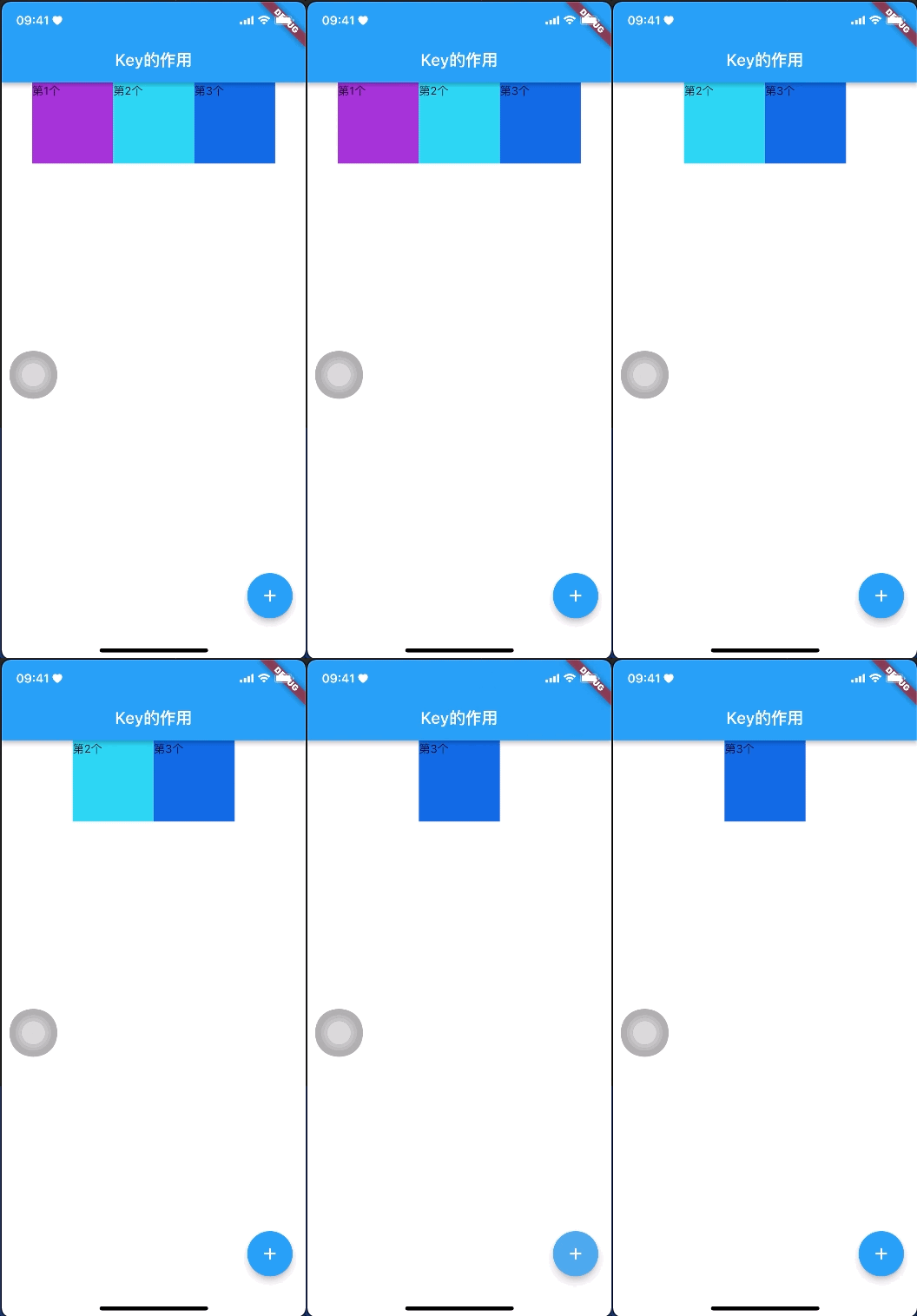
有效!
Key
Key 本身是一个抽象类,有一个工厂方法:
/// A [Key] is an identifier for [Widget]s, [Element]s and [SemanticsNode]s.////// A new widget will only be used to update an existing element if its key is/// the same as the key of the current widget associated with the element.////// {@youtube 560 315 https://www.youtube.com/watch?v=kn0EOS-ZiIc}////// Keys must be unique amongst the [Element]s with the same parent.////// Subclasses of [Key] should either subclass [LocalKey] or [GlobalKey].////// See also:////// * [Widget.key], which discusses how widgets use keys.@immutableabstract class Key { /// Construct a [ValueKey<String>] with the given [String]. /// /// This is the simplest way to create keys. const factory Key(String value) = ValueKey<String>;
/// Default constructor, used by subclasses. /// /// Useful so that subclasses can call us, because the [new Key] factory /// constructor shadows the implicit constructor. @protected const Key.empty();}- 它有两个子类
LocalKey- 同一个
父Element内唯一的
- 同一个
GlobalKey- 整个
App内唯一
- 整个
刚才用的
ValueKey是LocalKey的子类。
LocalKey
区别哪个 Element 要保留,哪个 Element 要删除。
/// A key that is not a [GlobalKey].////// Keys must be unique amongst the [Element]s with the same parent. By/// contrast, [GlobalKey]s must be unique across the entire app.////// See also:////// * [Widget.key], which discusses how widgets use keys.abstract class LocalKey extends Key { /// Abstract const constructor. This constructor enables subclasses to provide /// const constructors so that they can be used in const expressions. const LocalKey() : super.empty();}ValueKey- 以值作为参数(数字、字符串等)
ObjectKey- 以对象作为参数
UniqueKey- 创建唯一标识
GlobalKey
在整个 App 中 唯一的Key。 GlobalKey 可以唯一标识一个元素, 比如访问一个 BuildContext 或者一个 Widget。对于 StatefulWidget 而言, GlobalKey 也可以访问 State 。
当有 GlobalKey 的 Widget 被移动到 Widget树 中新的位置的话,会重新渲染他们的子树。
为了渲染子树,一个 Widget 必须在同一个动画帧内完成在树中,从旧位置移动到新位置。
重新渲染一个使用 GlobalKey 的 Element 是很消耗性能的,因为会触发调用所有相关的 State 的 deactivate 方法,然后让所有依赖 InheritedWidget 的 Widget 重建。
所以如果你不需要达到上面的效果,那么建议使用其他的 Key 。
注意点
- 两个在同一个树中的
Widget不能同时有相同的GlobalKey。尝试这样做的话在运行时会触发异常。 GlobalKeys不应该再每次build的时候被重新创建。他们应该是长期被一个 State 所持有的。- 例如:
- 每次
build的时候都创建一个新的GlobalKey会丢弃和旧Key相关的子树,并为新Key创建一个新树。除了会损害性能,这种操作还有可能会对子树造成未知的影响。 - 例如子树中的
GestureDetector将无法继续追踪正在进行中的手势,因为它会在每次build的时候被重新创建
- 每次
- 例如:
- 比较好的做法是:
- 让一个
State持有这个GlobalKey,并且在Build方法外初始化它 - 比如在
State.initState中
- 让一个
GlobalKey简单示例
import 'dart:math';
import 'package:flutter/material.dart';
void main() { runApp(const MyApp());}
class MyApp extends StatelessWidget { const MyApp({Key? key}) : super(key: key);
@override Widget build(BuildContext context) { return MaterialApp( title: 'Flutter Demo', theme: ThemeData( primarySwatch: Colors.blue, ), home: GlobalKeyDemo(), ); }}
class GlobalKeyDemo extends StatelessWidget {
final GlobalKey<_GKeyItemState> _gKey = GlobalKey();
GlobalKeyDemo({Key? key}) : super(key: key);
@override Widget build(BuildContext context) { return Scaffold( appBar: AppBar( title: const Text('Key的作用'), ), body: Center( child: GKeyItem(key: _gKey,), ), floatingActionButton: FloatingActionButton( child: const Icon(Icons.add), onPressed: () { _gKey.currentState?.setState(() { _gKey.currentState?.count += 1; }); }, ), ); }}
class GKeyItem extends StatefulWidget { const GKeyItem({Key? key}) : super(key: key);
@override _GKeyItemState createState() => _GKeyItemState();}
class _GKeyItemState extends State<GKeyItem> { int count = 0;
@override Widget build(BuildContext context) { return Center( child: Text('$count'), ); }}